AI Benefits / HR SaaS
Nayya Integration
Designed the integration of Nayya as an AI-powered benefits tool, guiding employees to choose coverage that matched their needs.
Year
2025
Role
Sr. Product Designer
Client
Paychex via ITX Corp
307%
IRR
Projected ROI,estimated return from increased plan uptake (NPV $11.4M).
~115,500
Annual Benefits
Enrollments completed 5% above the 100K goal.
67%
Conversion Rate
Users who received Nayya recommendations that fit their needs and enrolled in a plan.
Overview
Structure
My Role
- UX Strategy
- Integration UX
- User Research
- Product Thinking
Tools Used
- Figma
- Jira
- Miro
- Webex
- Outlook
- Copilot
- Hotjar
Timeline
6 months
Research & Discovery
Methodology
1. Understand
Clarified the benefits selection journey and Nayya Choose's role in decision support.
2. Define
Identified the feasible integration path between Flex and the external Nayya experience.
3. Align
Collaborated with the Solution Leads, Product Onwer, Business Analyst and Devs.
4. Validate
Recommended user testing to understand concerns before finalizing the handoff.
5. Measure
Used enrollment behavior and revenue projections to evaluate impact.
Case Study
The problem
Employees needed more support when selecting benefits, and Nayya Choose offered a strong recommendation engine to guide them toward more relevant coverage.
The project moved on an aggressive timeline and came with significant technical limitations. A seamless embedded integration between Flex and Nayya Choose was not feasible.
Context
I was responsible for helping define the best integration path between the two platforms while protecting the user experience as much as possible.
This meant balancing business value, technical constraints, and user confidence during a sensitive decision-making process.
Because a seamless integration was not possible, we identified that users would need to leave Flex and access Nayya Choose in a separate experience.
To reduce friction, I helped recommend user testing to better understand concerns before finalizing the experience.
The research showed users needed clearer communication about where they were going, why the transition mattered, and visual cues that made the handoff feel intentional and trustworthy.
32%
of employees dropped off before completing the benefits selection flow
44%
of employees felt confident they had selected the best plan for their needs
48%
understood why they needed to continue in a separate experience
2.9/5
trust score for the transition in testing
Design Proposal
I started by reviewing the available data, gathering the right inputs, and aligning with the team on constraints and goals before moving into design.
From there, I explored several integration approaches and evaluated each one based on timing in the user journey, technical feasibility, and how clearly it communicated the value of the experience.
Once a direction was selected, I designed the handoff to feel intentional and trustworthy, using clear messaging and visual cues to help users understand the transition and stay confident as they chose their benefits.
Alternatives explored
Three integration approaches were considered and assessed on placement, feasibility, and user support. The guided decision modal was selected as the strongest option and moved into testing.
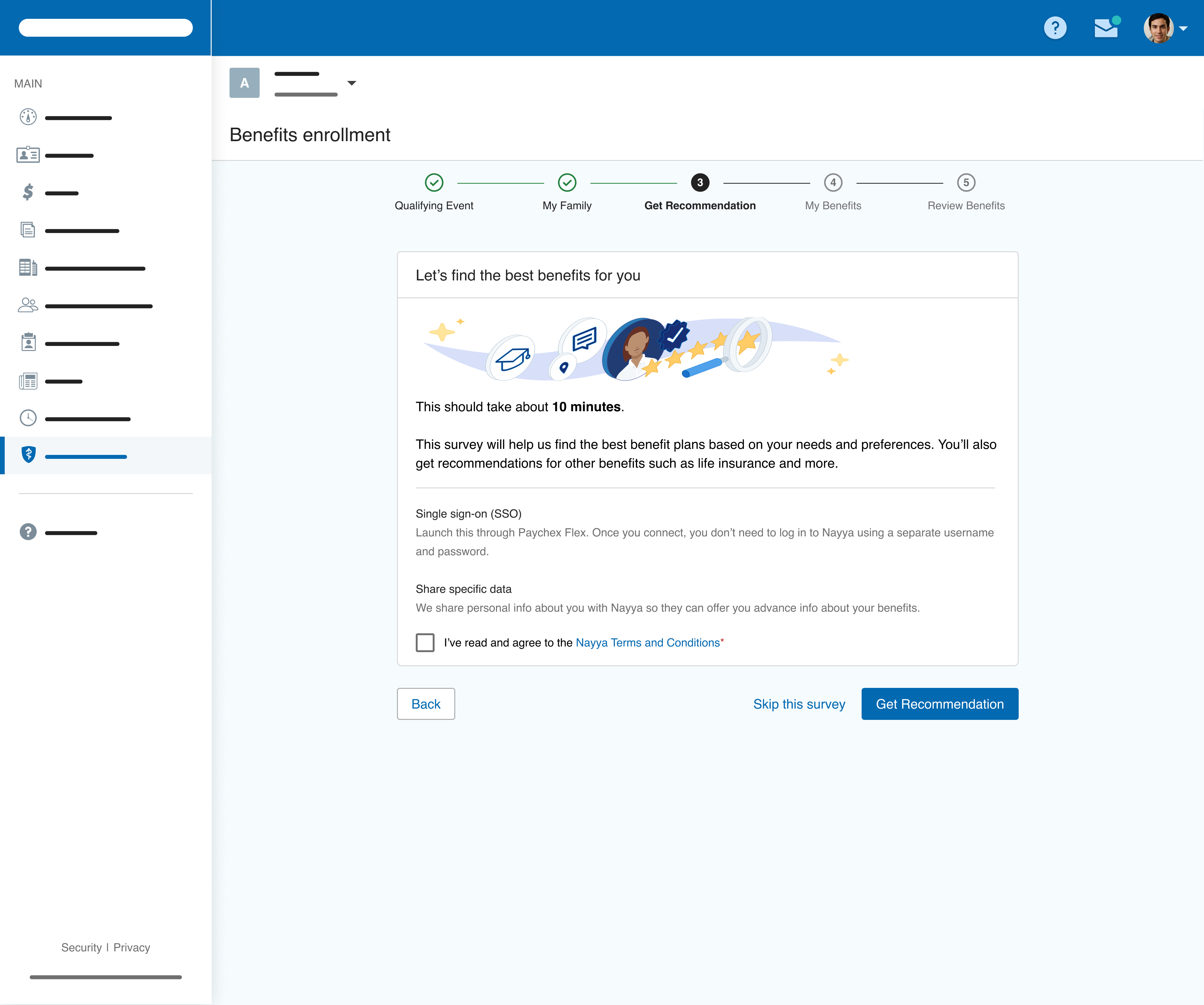
Embedded Nayya section
Add the Nayya form as its own step inside the enrollment process, keeping the assistance directly in the core flow.
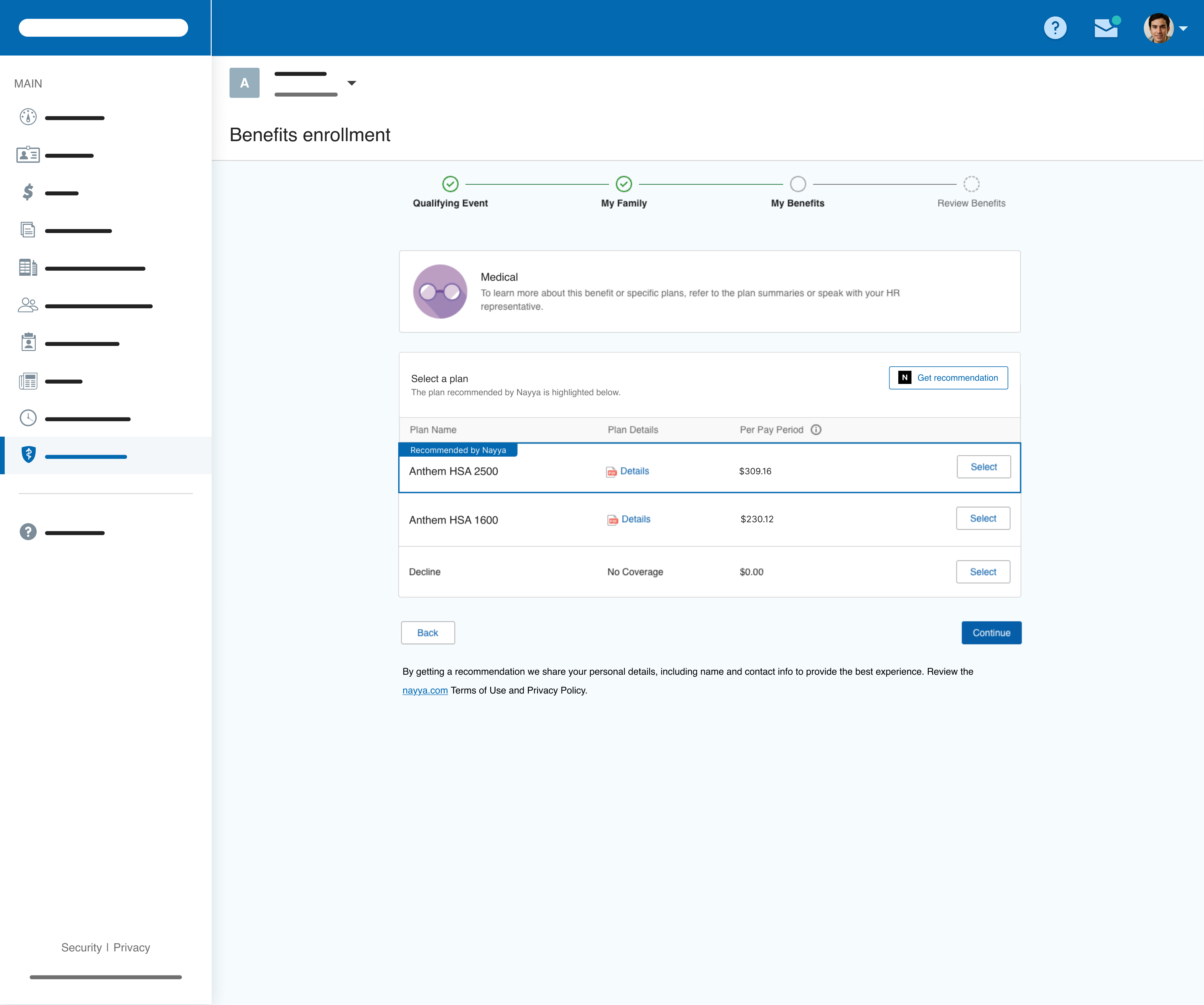
Benefit-list entry point
Place a button in the benefits list so users could choose to use Nayya while reviewing available coverage options.
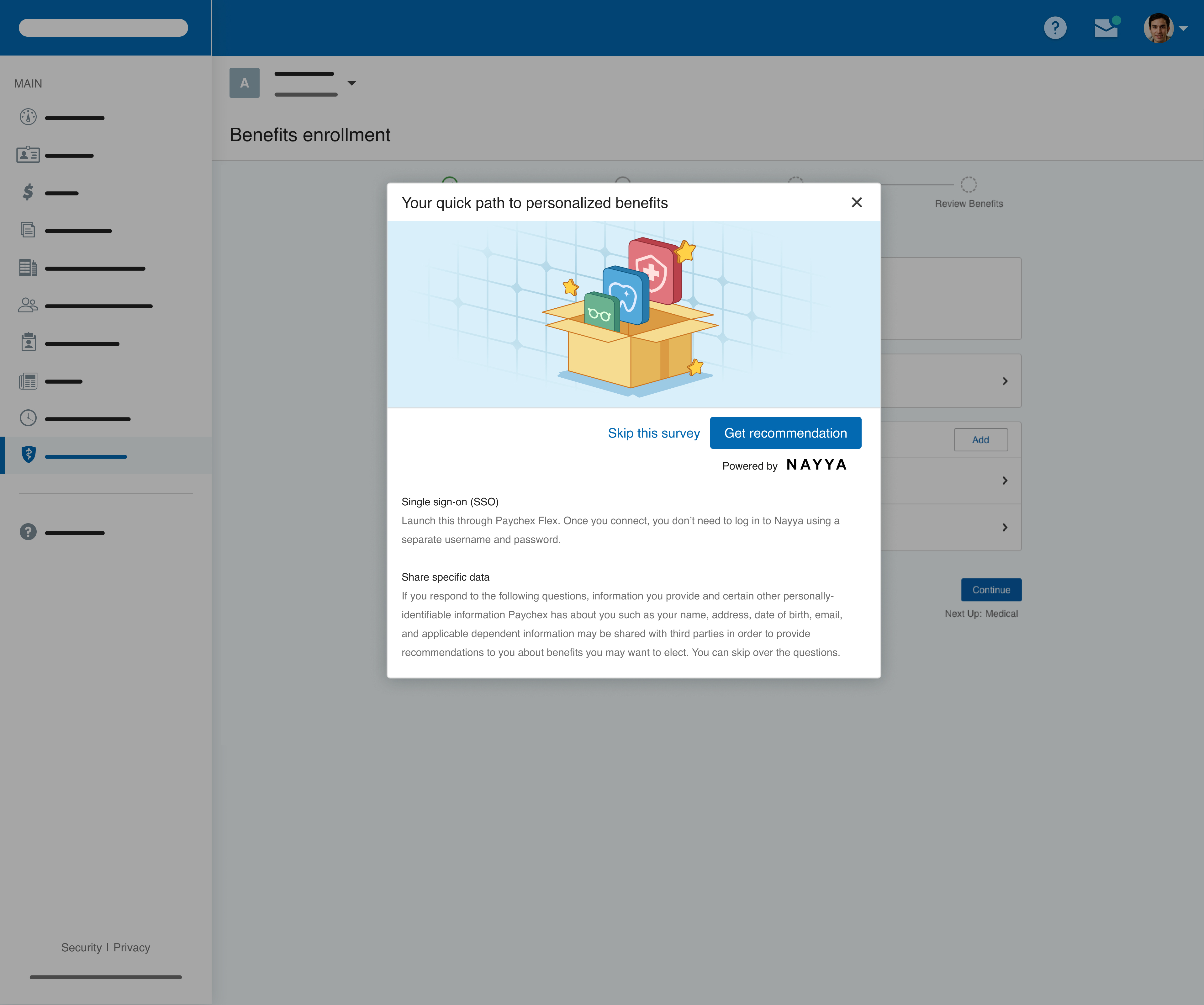
Guided decision modal
Show a modal after users entered their family information, when guidance felt timely connected to choosing better benefits.
Alternative
Embedded Nayya section
Strength
Most seamless and visible inside enrollment.
Tradeoff
Required too much product and engineering work for the project scope.
Decision
Rejected
Alternative
Benefit-list entry point
Strength
Lower implementation effort and easy to place in the existing UI.
Tradeoff
Relied on users noticing and seeking help, which was not their primary goal in that moment.
Decision
Rejected
Alternative
Guided decision modal
Strength
Introduced help at a high-intent moment after family details were entered.
Tradeoff
Less deeply integrated than a full embedded section, but clearer and more feasible.
Decision
Selected
Key Insights from Testing
Research and discovery clarified the key questions for testing: Did users understand the handoff, feel confident continuing, and maintain trust throughout the experience? The selected guided decision modal was the concept tested, and the findings showed which parts of the integration felt clear and where friction still remained.
7
Participants
Finding
Moderated usability testing on the integrated prototype
Insight
Representative sample for qualitative insight, with patterns that were consistent across participants
4/5
Satisfaction score
Finding
Users rated their overall experience completing the flow
Insight
High comfort level with the process, and users felt supported through the benefit selection steps
100%
Task completion
Finding
All participants successfully completed the end-to-end flow
Insight
Core interaction design supported task completion without critical failure points
High
Data trust
Finding
Users felt comfortable sharing personal information within the Nayya form
Insight
Trust signals and context-setting reduced anxiety around data sharing
Low
Form fatigue
Finding
Users perceived the form as shorter than expected
Insight
Perceived effort was lower than anticipated, reducing drop-off risk at form entry
Critical
Transition clarity
Finding
Users did not know Nayya was part of the Flex process and were confused returning to their original point
Insight
The platform handoff lacked sufficient context, and users lost their place after completing Nayya
Modal
Dismissal rate
Finding
Some users closed the modal automatically without reading it
Insight
Reflexive dismiss behavior suggests the modal pattern may need reconsideration or a stronger hook
Low
Question relevance
Finding
A few users questioned why certain personal questions were being asked
Insight
Missing context around question purpose means users need clearer rationale to stay engaged
The Solution
The integration showed clear value for users who engaged with Nayya Choose. Participants who completed the survey enrolled in twice as many benefits as those who skipped it, and the work contributed to measurable growth across medical, ancillary, and PEO revenue.
Results & Impact
2%
Annual growth target - Medical
8%
Annual growth target - Ancillary
$1M
FY26 medical growth
$2M
FY26 ancillary growth
$6M
Full-year impact - Flex
$10M
Full-year impact - All PEO
Enrollment Behavior Insights
- Baseline average plans per participant (2023-2025): 4.46
- 2026
- Participants who "skipped" Nayya: 2.57
- Participants who only "started" Nayya: 4.43
- Participants who got recommendations from Nayya: 5.44
Participants who completed the Nayya survey enrolled in TWICE as many benefits as those who skipped it.
Opportunities and Next Steps
- Less than 7% of eligible employees completed a Nayya survey, leaving strong room for growth.
- Increasing completion to 10% could add 10,000+ plans and generate $2M-$7M in incremental PEO benefits revenue.
- Further research opportunities include deeper analysis of Nayya survey behavior and year-over-year enrollment changes.
- Potential product expansion areas include 401(k), FinFit, and PayActiv recommendations.
Learnings
Designing under constraints. Designing under technical constraints does not mean compromising the experience. It means finding the most effective path within the boundaries you are given.
Test early, fix early. User testing, even at a small scale, surfaces the decisions that matter most before they become expensive to fix.
Trust is a design problem. When users cross platform boundaries, clarity and context are what keep them moving forward.
Constraints force focus. The inability to embed Nayya natively pushed the team to invest in transition design, an area that is often overlooked when seamless integration feels like the obvious solution.

Tools
Tags
More work
Other Projects
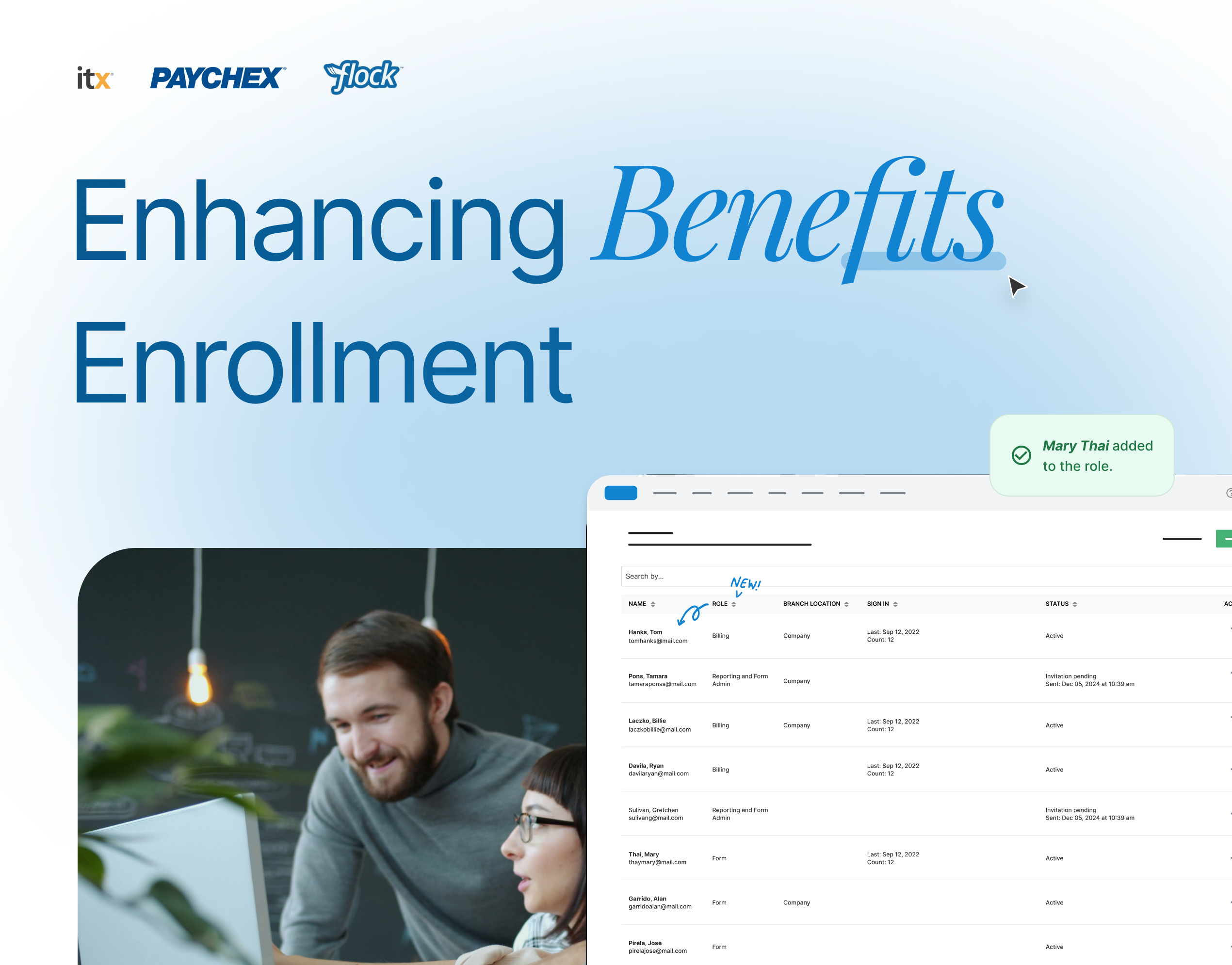
Self-Service Access and Role Management
Replaced a manual workflow with a centralized, self-managed platform; cutting processing time by 72%.
View case study →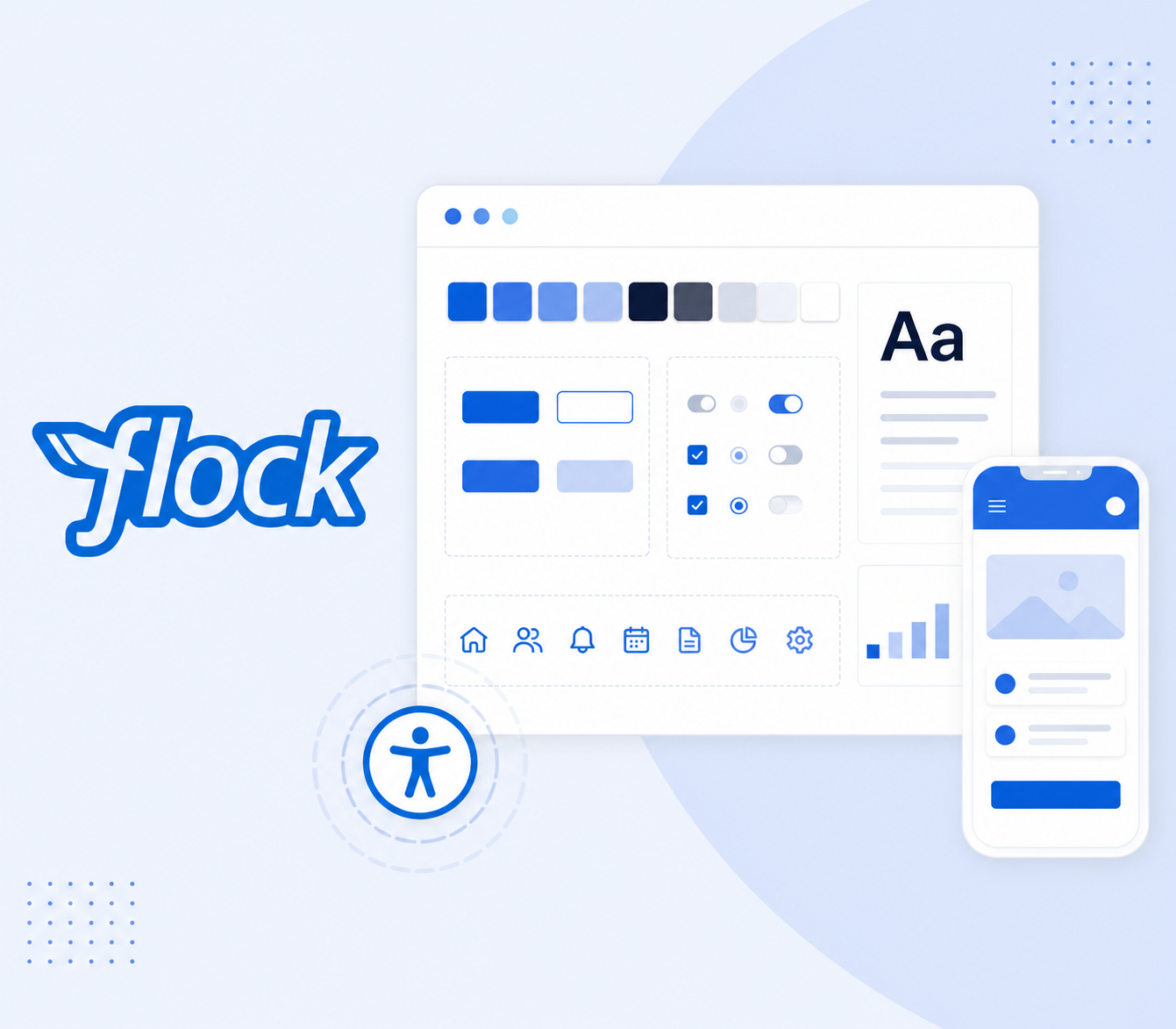
Flock Accessibility Audit & Design System Unification
Led an accessibility audit and helped unify the design system. This reduced pattern debt, made the product more consistent, and improved collaboration between design and development teams.
View case study →
I-9 & E-Verify Integration
Redesigned the I-9 and E-Verify integration for Flex, increasing post-launch completion from 69% to 81% and reducing completion time by 26%.
View case study →